INVESTMENT · NOVEMBER 2026
Wine investment guide 2026: physical ownership vs digital platforms
By Oria Toscana · November 24, 2026 · 7 min read
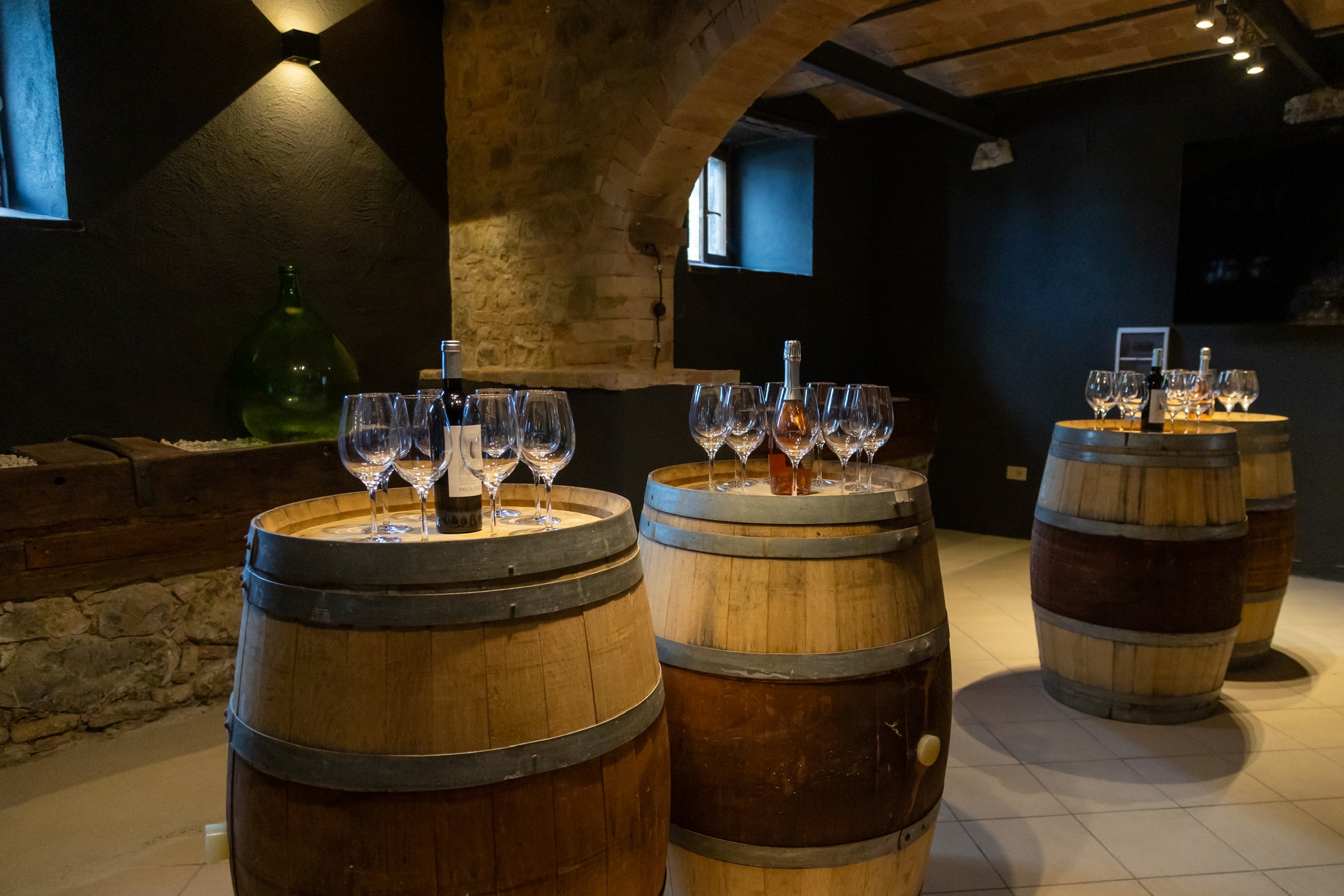
Wine investing today splits into two paths: digital platforms — convenient, but with fees that repeat every year — and physical ownership, which for decades meant buying a whole estate. Between them, a third has grown: membership.
Two paths (and a new one)
On one side, platforms like Vinovest or Cult Wines give you exposure to fine wine from a few thousand dollars: they select, store and insure on your behalf, for an annual fee. On the other, owning a vineyard outright always meant millions of euros and the full weight of running it. The fractional membership model combines the best of both: a real plot, with your name and your bottles, without the complexity of managing a winery.
Wine as an asset
Fine wine has earned a place as an alternative asset: over the long run it has returned something like equities but with lower volatility, and it moves fairly independently of the stock market, which is why it is used to diversify. Returns vary widely by region, label and vintage and — like any asset — past performance does not guarantee future results.
- Scarcity: prestige regions produce a fixed, limited quantity; as bottles are consumed, the supply of older vintages shrinks.
- Rising global demand: new markets in Asia and the Americas are developing a taste for fine wine.
- A tangible asset: unlike a share, a great wine can be enjoyed, gifted or inherited, and — stored well — it improves with age.
- A long horizon: wine rewards patience; you think in years, not months.
Digital platforms
They curate and store wine for you; you hold the exposure (sometimes the bottles, sometimes fractions) and they handle selection, authentication, storage and insurance — for a fee.
| Platform | Typical minimum | Annual fee | Physical bottles | Storage included |
|---|---|---|---|---|
| Vinovest | ~$1,000+ | ~1.9–2.85% (tiered) | Yes (ship on request) | Yes |
| Cult Wines | ~$35,000+ | ~2.0–2.75% (tiered) | Yes | Yes |
| Vint | ~$25 (fractional) | fee on purchase | No (fractions) | N/A |
| WineFi | ~£5,000+ | varies | Limited | Yes |
In their favour: a low barrier to entry, professional selection, authentication and insurance, and liquidity. The trade-offs: fees compound (2–2.75% a year erodes net returns over a decade), little control over the portfolio, and no experiential dimension — it is a financial position, nothing more.
Physical ownership: from the whole estate to membership
Buying a whole vineyard is the purest form of ownership, and the heaviest. In Brunello di Montalcino a hectare runs around a million euros and a mid-level estate can exceed 20 million; and that is before taxes, insurance, machinery, labour and farming risk. It is a full-time business, not a passive investment.
Membership keeps the authentic part — a real plot, decision-making, your bottles, legacy — and removes the operational burden. That is where Oria comes in.
How Oria membership works
Oria is in the Montalcino area, in the Val d'Orcia, in the heart of Tuscany: a UNESCO World Heritage landscape since 2004, at around 300 m of altitude, on the galestro soils that give Sangiovese its structure. The wines are signed by winemaker Roberto Cipresso, and the local team takes care of the vineyard, the harvest and the cellar.
Instead of paying tens of millions for an estate, each member owns their own plot, from a Filare of about 100 m² to Terroir plots of more than 5,000 m². Entry starts from €13,500, and — unlike the platforms — with no mandatory annual maintenance fees.
Each vintage, Oria vinifies only the wine members have reserved: a member receives bottles from their plot with their own label, or exchanges them for other Oria products and for Roberto Cipresso's range. Membership also opens his entire cellar — from Brunello and Rosso di Montalcino to the wines he makes around the world — with a 20% discount through MyORIA.
And the structure is already solved: Oria operates through an Italian agricultural company, with the legal scaffolding so that a member does not have to set up their own company in Italy to be part of a Val d'Orcia vineyard.
| Traditional estate | Oria membership | |
|---|---|---|
| Entry | Buying the whole estate (millions) | From €13,500 — your own plot |
| Annual maintenance | Taxes, insurance, staff… | No mandatory annual fees |
| Legal complexity | High | Handled (Italian agricultural company) |
| Management | Full-time / contractors | Professional team included |
| Winemaking | Your problem | Signed by Roberto Cipresso |
| Horizon | Long | Designed for 10 years and beyond |
Beyond ROI
What no app gives you is a place to return to. Oria is in the Val d'Orcia — one of the most recognizable vineyard landscapes in the world — close to Siena, Montalcino and Florence.
- Moments in the vineyard and the cellar: harvest, tastings, the life of the estate.
- Oria Day, the community's annual gathering.
- Stays on the property (agriturismo), with the cellar in the monastery: an annex of Siena's historic Santa Maria della Scala hospital is today Oria's cellar.
- More than wine: aceto balsamico aged in a batteria, the olive oil, and a first brandy with Vittorio Capovilla.
- MyORIA, the platform where each member sees their plot, manages their bottles and books their visits.
The cost over time
Over a decade, the quiet cost of a digital platform is its annual fee: on a six-figure position, 2–2.75% a year — plus selling fees — eats a good part of the net return, in exchange for a purely financial relationship to the wine. Membership reverses the logic: management, insurance and winemaking are built into the model rather than billed as an escalating annual percentage, and the “return” includes your bottles, discounted access to Cipresso's cellar and a place in Tuscany you actually use.
Which path suits you?
A digital platform if you are a first-time investor, want a low entry point and a fully passive position, and are driven only by the financial side. A membership like Oria if you care about the wine itself, want a place and a community, value the experience alongside the potential return, and think in ten years or more.
Conclusion
In 2026 there is a path for every temperament. Digital platforms are a great on-ramp to begin, at the cost of recurring fees and zero experience. Physical ownership, through a membership like Oria's, offers the complete package: a real plot in the Val d'Orcia, wines signed by Roberto Cipresso, bottles with your own label, access to a legendary cellar and a place to return to every year — without the risk and logistics of a whole estate. Whatever you choose, wine remains one of the few assets that, quite literally, improve with age.
Want to know how to become part of it?
Write to us and we'll tell you how Oria membership works: your plot in the Val d'Orcia, your bottles with your own label and a place to return to every year.
Talk to OriaInvesting in wine carries risk and past performance does not guarantee future results. Consider your own situation and seek advice before investing. Third-party platform details are summarized from public information and may change; verify current terms with each provider.