GASTRONOMY · JULY 2024
The Discovery of Strinto Porcino:
Forgotten Cured Meats of Tuscany
By Oria Toscana · July 12, 2024 · 7 min read
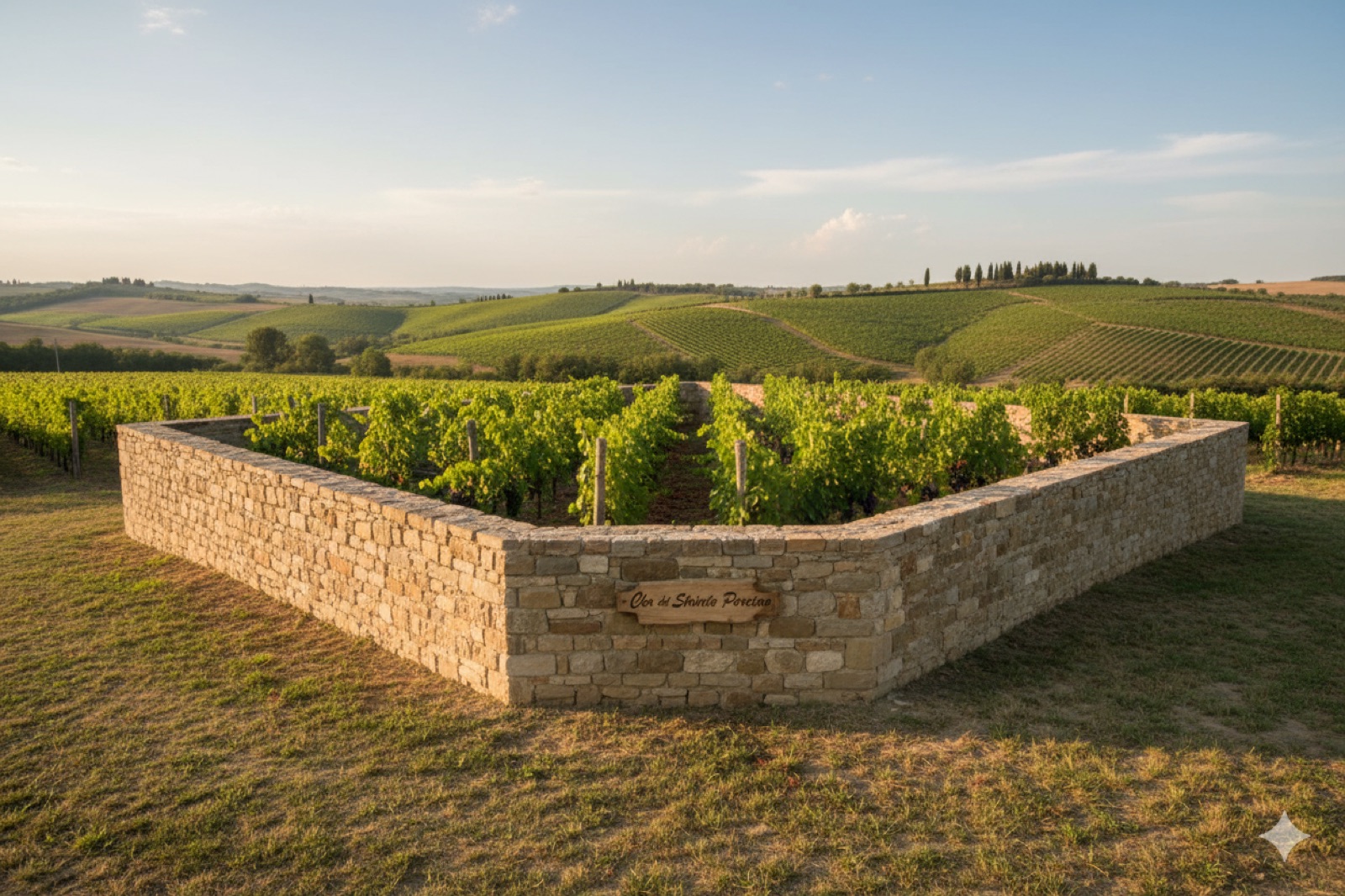
In Tuscan gastronomy there are flavors that survived five centuries because no one documented them enough for anyone to be able to counterfeit them.
It happened in the cellar of one of the oldest houses on the estate. While we were preparing the space for the aceto barrels, we found a curing chamber sealed with bricks — part of it, at least — dating from the 16th century. On the porous stone walls there still hung wrought-iron hooks, rusted but intact. And in one of the archives the notary recovered along with the property deeds, a handwritten reference: strinto porcino, ottobre 1734.
Strinto porcino. No one on the team knew it. We investigated.
What strinto porcino is
Strinto is a cured meat of Tuscan tradition that practically disappeared in the 20th century with the industrialization of norcineria — the craft of pork. Unlike the great Tuscan cured meats known internationally, strinto was a product of the peasant household economy: it was made with the less noble cuts of the pig, cured with coarse sea salt, wild fennel seeds and black pepper, and left to dry in stone chambers throughout the winter.
Its name comes from the Tuscan dialect: strinto means "tight," in reference to the pressing technique applied to the cured meat during the curing process. The result was a compact salami, of dense texture and deep flavor, with a vegetal base of fennel that no industrial cured meat can replicate.
The norcino of Pienza
With the historical reference in hand, we looked for someone who might know more. We found Marco, a fourth-generation norcino in Pienza — the city of Pecorino — who had heard of strinto from his grandfather but had never made it. We showed him the reference from 1734. He fell silent for quite a while.
"My grandfather mentioned that in the old houses of Val d'Orcia they made a salami with fennel that was like nothing he had ever tasted. I thought he was exaggerating," he told us.
We decided to try it together. Marco used Cinta Senese pigs — the native pig breed of Tuscany, with its characteristic white band over the dark back — and spices that followed the oldest description we found. The first batch cured for four months in the same stone chamber we discovered on the estate.
The result
Cutting it for the first time was an almost archaeological act. The interior color was deep red with white veins of fat distributed in a completely different way from a conventional salami — more irregular, more rustic. The smell was immediately recognizable as something Tuscan: earth, fennel, the minimum of salt that does not overwhelm, a smoky base that no one explained how it got there but that Marco attributes to the stone of the chamber itself.
The flavor. The flavor is what justifies this whole article. There is an intensity that time and the artisanal process produce and that no modern technology can replicate. It is not "stronger." It is more complex. Each layer of flavor arrives at a different moment.
"Forgotten flavors don't disappear. They simply wait for someone to seek them with enough curiosity." — Marco, norcino of Pienza
Strinto at the Oria table
From this first experimental production, strinto porcino has entered the Oria table. Members who visit the estate find it on the welcome tables alongside the Pecorino of Pienza, the oil of the century-old olive trees and the unsalted Tuscan bread. Not as a restaurant curiosity. As part of the territory that now belongs to them.
Marco makes strinto for Oria in small quantities — an autumn production, as tradition dictates. Each piece takes six months to be ready. There is nothing faster than that.
Members discover the whole territory
Wine, aceto, oil, strinto — the estate produces more than grapes.
Talk to Giulia