Strinto Porcino: the grape at the origins of Sangiovese
For decades the origin of Sangiovese was a mystery. Today we know that a rare, almost-forgotten grape from southern Italy —Strinto Porcino— is written into its DNA.
A history written in its DNA
For decades, the origins of Sangiovese remained shrouded in mystery, caught between the hypothesis of an Etruscan-Tuscan origin and that of ancient migrations along the Apennines. A decisive breakthrough came in 2021, thanks to a study on Italian grapevine germplasm conducted by eight scientific institutions —including CREA and several universities— and published in the journal Frontiers in Plant Science.
Through DNA testing based on SSR microsatellite markers and the reconstruction of the “Atlas of Italian Grape Varietal Relationships,” the researchers confirmed a direct first-degree —parent-offspring— relationship between Sangiovese and Strinto Porcino.
Strinto Porcino thus emerges as one of the two progenitors of Sangiovese, while the second parent remains unknown or may now be extinct. Along with Mantonico, it is considered one of the founding patriarchs of viticulture in Southern Italy: a rare indigenous variety, historically widespread in the Lucania-Calabria region, of which relict populations have been identified in Basilicata. Sangiovese is believed to have originated from a spontaneous cross that occurred along the ancient trade and migration routes between Southern and Central Italy.
Portrait of an ancient grape
At first glance, Strinto Porcino immediately reveals its ancient nature. Its morphological characteristics are rustic and largely untamed, typical of those relict native varieties that have not been shaped by modern winemaking selection.
The shoot has a moderately open apex, marked by a moderate amount of creeping fuzz. The mature leaf is medium-sized, generally three- or five-lobed, deep green, with a slightly blistered surface. The petiole sinus, open in a “V” or “U” shape, retains traits reminiscent of the most archaic forms of Sangiovese.
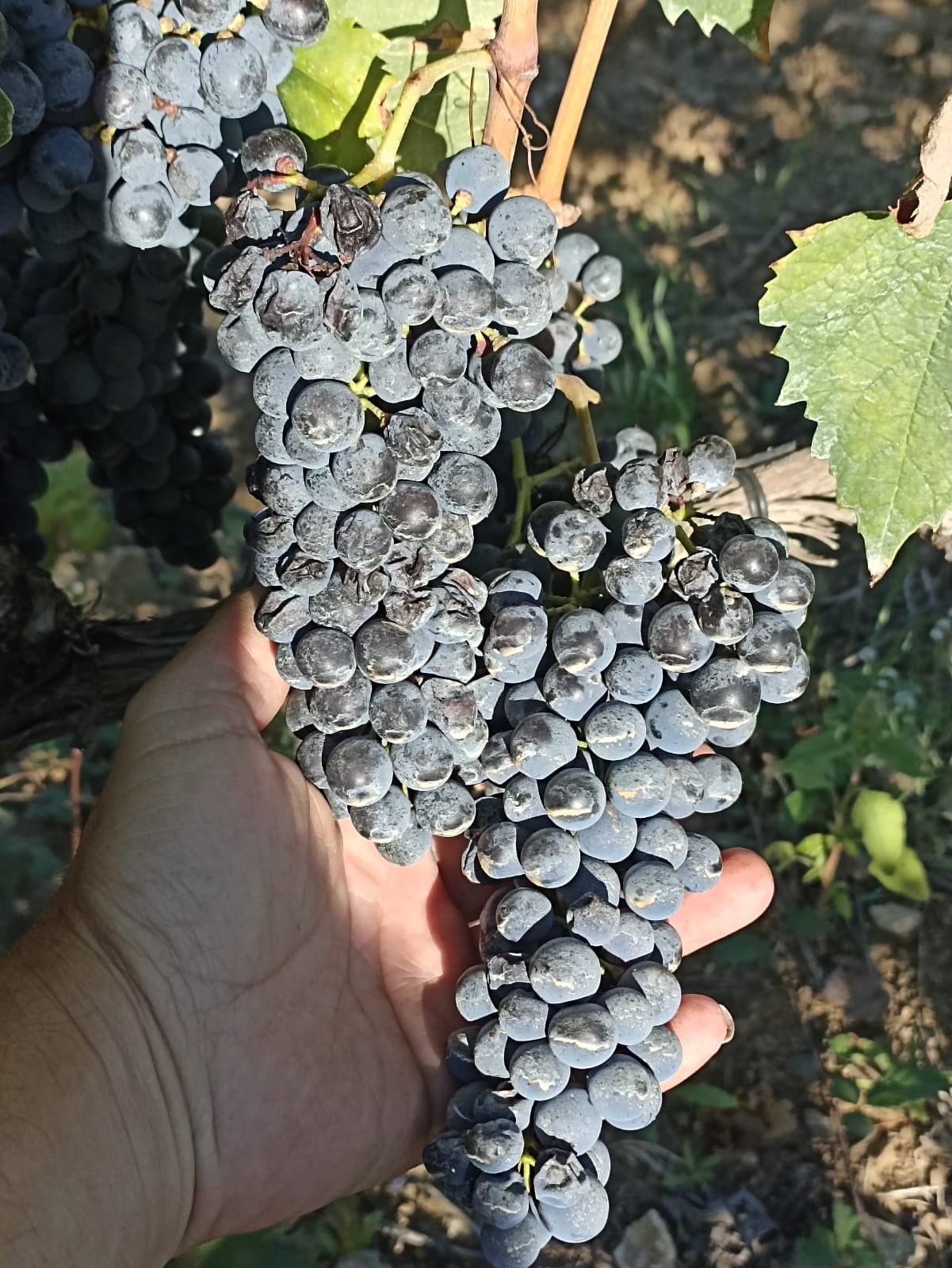
The cluster is small to medium in size and compact: it is precisely this tight structure that may explain the dialect term “strinto,” meaning “tight.” The berries are small and ovoid, with a medium-thick skin that is heavily pruinose and rich in blue-black anthocyanin pigments. The pulp, neutral and juicy, is distinguished by its pronounced acidity.
A legacy that lives on in Sangiovese
Observing the agronomic behavior of Strinto Porcino also helps us better understand the nature of Sangiovese and its extraordinary adaptability.
The first trait is hardiness: it shows a high tolerance for thermal and water stress, a trait Sangiovese has inherited and that lets it thrive on clay-limestone soils, even when rich in rock fragments. This resilience is complemented by a solid acidity and tannin profile. In particular, its fixed acidity contributes to the structural framework that gives Sangiovese its typical freshness and ability to age well. Its vegetative vigor is moderate but consistent, and requires careful canopy management to prevent imbalances.
Beyond the glass
While Strinto Porcino can produce ruby-red wines, supported by firm tannins and lively acidity, with aromas of rustic red fruits such as blackberry and wild plum and hints of Mediterranean scrub herbs, its value extends far beyond the glass. Today it is considered a germplasm of the highest scientific and conservation value, capable of linking the history of Italian viticulture to the challenges of the future.
Recovering and protecting the few remaining vines means, first and foremost, safeguarding biodiversity and preventing the loss of a fundamental component of Italian ampelography. At the same time, its heat tolerance and natural ability to retain acidity make it a genetic resource of great interest for research and grapevine breeding. In a changing climate, this ancient variety could offer surprisingly relevant solutions.
“Sangiovese carried, written into its DNA, the name of an almost-forgotten ancestor.”
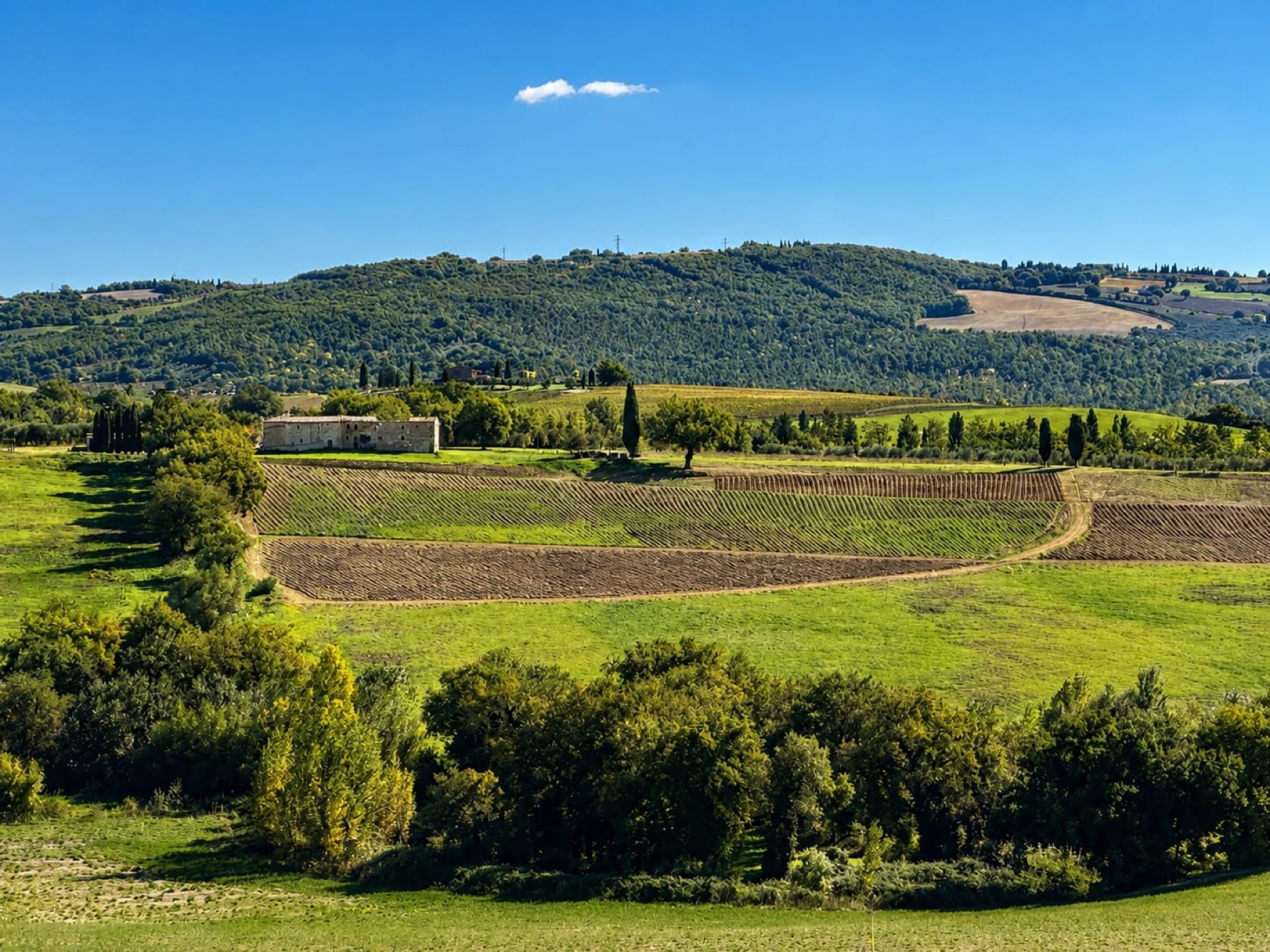
At Oria this story feels close to home: our Scientific Committee is studying the recovery of Strinto Porcino plant material, within a project to research and cultivate different Sangiovese clones. Understanding where this variety comes from is also a way of caring for its future.