OWNING A VINEYARD · NOVEMBER 2026
Buy a winery? What the specialist press says today — and the path we chose at Oria
By Oria Toscana · November 8, 2026 · 8 min read
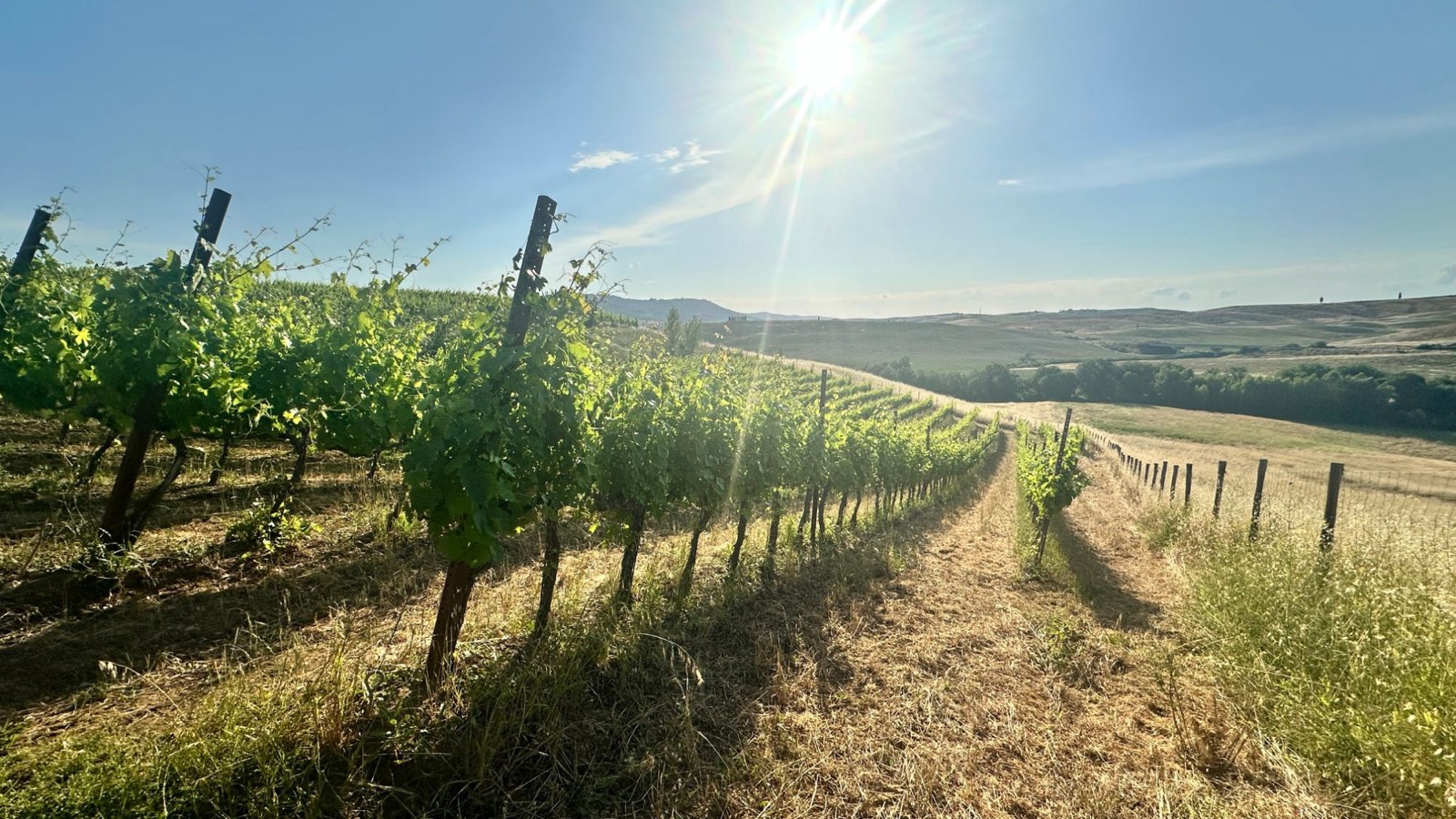
Owning a vineyard in Tuscany is still one of the great dreams of any wine lover. A recent guide on how to buy a winery explains why it is more within reach than ever — and also harder than ever to do well.
A good moment to buy… and to think twice
In late October, journalist Elin McCoy, one of the most respected voices in wine writing, published How to Buy a Winery in Bloomberg, a practical guide for those who dream of owning their own winery. The starting point is clear: the sector is going through a hard time. Falling alcohol consumption, oversupply and climate change are pushing many producers to pull up vines and put their estates up for sale. In Bordeaux alone, the agency Vineyards-Bordeaux estimates there are between 500 and 1,000 vineyards for sale, and that a quarter of them may never find a buyer.
One of its founders, Michael Baynes, sums it up this way: he had never seen so many vineyards for sale at such low prices.
But the article quickly points to the paradox: the same forces that make a vineyard cheaper to buy make it harder to run profitably. Today success depends as much on spreadsheets, distribution and climate resilience as on terroir.
The four uncomfortable truths of the vineyard dream
Read closely, the guide leaves four messages that anyone who thinks of wine as a life project — or as an investment — should keep in mind.
1. Terroir rules, and you pay for it. The experts' advice is to buy the best land you can afford, in the most prestigious appellation possible and, if you can, with a strong wine-tourism circuit. Wines from little-known areas are harder to sell and fetch lower prices. The problem is the cost: according to the article, Tuscany is the favourite of American buyers, but in Brunello di Montalcino a hectare of vineyard runs around a million euros, and a mid-level estate can top 20 million.
2. It is a long and complex project. Buying a winery takes between six months and a year of negotiations, audits, soil analyses and approvals. And once bought, industry veterans are blunt: if your investment horizon is under ten years, better not to get in. Add to that the risks inherent in farming — frost, hail, drought, fire — and costs that are often underestimated, such as insurance, machinery and maintenance. In Napa, for example, insurance premiums rose by as much as 400% in just a few years because of wildfire risk.
3. The question that defines everything: why would anyone buy this wine? Selling and distribution are, according to the guide, the hardest part of the business — all the more so with global consumption falling and tastes that keep shifting. That is why many new owners bet on hospitality, wine clubs and direct-to-consumer sales.
4. Structure matters. The article recalls that choosing the right legal structure can make a difference, and specifically mentions that in Italy the status of professional agricultural entrepreneur allows you to reduce the registration tax on farmland.
How Oria answers each of those truths
When we conceived Oria, we started from exactly these questions. Not to deny how hard it is to own a vineyard, but to make the dream possible without each person having to carry all that complexity alone.
First-class terroir, without buying a whole estate. Oria is in the Montalcino area, in the Val d'Orcia, in the heart of Tuscany: exactly the kind of place the guide recommends looking for. Instead of paying tens of millions for an entire property, each member owns their own vineyard plot, on a scale that runs from a 100 m² Filare to Terroir plots of more than 5,000 m².
The know-how is already on site. The article insists on surrounding yourself with experienced agronomists, winegrowers and managers. At Oria, the wines are signed by winemaker Roberto Cipresso, and the local team takes care of the vineyard, the harvest and the winemaking. The member enjoys the result without having to become an expert in soils, yields or harvest dates.
Every bottle already has a destination. To the question of why anyone would buy this wine, we answer with the model itself: each vintage, Oria vinifies only the wine that members have already reserved. The member receives bottles from their plot with their own label, or can exchange them for other Oria products and for Roberto Cipresso's range. No accumulated stock and no dependence on a distributor.
Access to Roberto Cipresso's entire cellar. Being an Oria member also opens the door to Roberto Cipresso's full production, with a 20% discount off list price through MyOria: from Brunello di Montalcino and Rosso di Montalcino to the range of wines he makes in different regions around the world. So the member enjoys the best of Montalcino without having to pay the million euros per hectare that, according to the guide, a Brunello vineyard costs today.
Growing with prudence. In a context of climate change and falling consumption, we choose to plant little by little and expand the vineyard at the pace of the community of members, instead of betting everything on one large planting all at once.
Hospitality and community, not just wine. The guide points to wine tourism and direct experiences as one of the great levers of the business. At Oria, members have a place to return to: stays on the property, Oria Day, experiences in the cellar and the vineyard, and MyOria, the platform where each member sees their plot, manages their bottles and books their visits.
The structure is already solved. Oria operates through an Italian agricultural company, with the legal and corporate scaffolding needed so that the member does not have to set up their own company in Italy to be part of a vineyard in the Val d'Orcia.
Built for the long term. We agree with the experts: wine is not a short-term business. That is why our memberships are designed for ten years or more, and each plot matures together with its vines.
The dream is intact; what changes is the way
McCoy's guide ends with stories of happy owners, but also with a warning: the romance of owning a vineyard quickly meets the reality of running one. We believe the two can coexist. You can own a piece of Tuscany, a bottle with your name on it and a place to return to every year, without carrying the risk, the logistics and the uncertainty of an entire winery on your own.
That, in the end, is Oria's purpose: to turn the dream of owning your own vineyard from a privilege of the few into a community.
Want to know how to become part of it?
Write to us and we will tell you how Oria membership works: your plot in the Val d'Orcia, your bottles with your own label and a place to return to every year.
Talk to OriaSource: Elin McCoy, “How to Buy a Winery”, Bloomberg, October 30, 2026.